
Book launch & Facing the Future gallery
On 17th July 2026, we welcomed guests to an evening celebrating the launch of a new Oxford University Press book co-edited by Professor PG Roy, alongside a powerful portrait exhibition by artists Ruth Swain and Paul Starns, titled 'Facing the Future'.
This special event brought together clinical expertise, personal stories and artistic expression to explore the profound ways breast cancer influences the lives of those affected, including patients, families and wider communities.
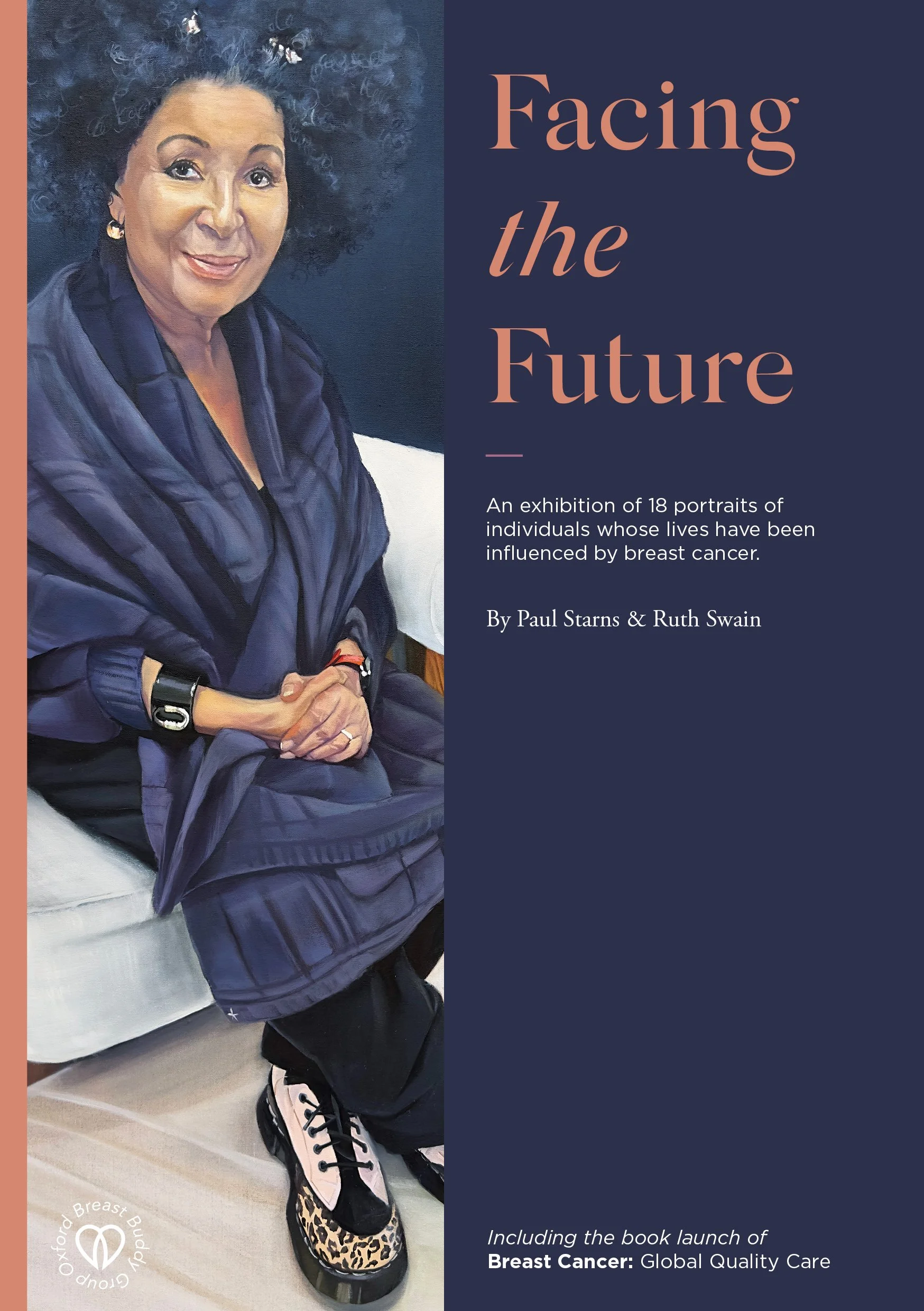
The accompanying exhibition features 18 portraits of people whose lives have been affected by breast cancer, including patients, healthcare professionals, researchers, and loved ones.
Through portraiture and personal stories told in the sitters’ own words, the exhibition highlights the many ways breast cancer touches individuals, families, and communities, while celebrating resilience and raising awareness of the realities of living with and beyond a diagnosis.
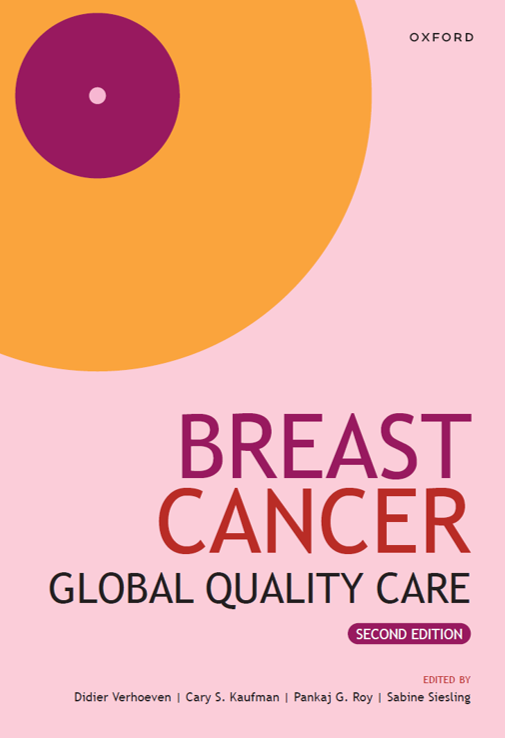
The open-access book explores the social, financial, and political dimensions of breast cancer, bringing together perspectives from patients, clinicians, caregivers, researchers, and policymakers.
Designed to bridge academia, clinical practice, and policy, it offers valuable insights for everyone involved in breast cancer care.
Together, the book and exhibition offered a unique opportunity to reflect on how breast cancer affects people from all walks of life and to engage with the lived experiences that shape our understanding of the disease.
Featured Portraits from “Facing the Future”
An exhibition of 18 portraits of individuals whose lives have been influenced by breast cancer.
By Paul Starns & Ruth Swain
Yvonne Walcott-Yates
By Ruth Swain
“Going through breast cancer as a family taught me that what people remember most is not only the treatment itself, but how they were cared for, listened to, and supported.”
I am an artist and film producer, and a passionate supporter of OBBG, having witnessed first-hand the difference its care and support can make to families affected by breast cancer.
As both a supporter of the charity and a family member whose loved ones have been touched by breast cancer, I have seen the invaluable role OBBG plays during some of life’s most challenging moments. When my mother and sister underwent breast cancer treatment, the charity was there to provide guidance, compassion, and practical support throughout their journeys. For my sister and her family especially, that support meant far more than medical care alone — it brought reassurance, understanding, and the comfort of knowing they were not facing the challenges ahead on their own.
Going through breast cancer as a family taught me that what people remember most is not only the treatment itself, but how they were cared for, listened to, and supported. The experience strengthened my belief that empathy and human connection are among the most powerful forces we have, and they continue to be central to both my work and my life.
I am deeply grateful to the artist for creating this portrait, which I am proud to dedicate to OBBG in recognition of the support my family received and the charity’s unwavering commitment to helping others facing similar challenges.
Through this portrait, I wish to pay tribute to the compassion, resilience, and sense of community that OBBG represents. Their work makes a lasting difference when it is needed most, and I hope this contribution helps shine a light on the extraordinary impact they have on so many lives.
Emma Insley
By Ruth Swain
“I think it was one of the breast cancer nurses that gave me a heart shaped pillow…a simple gesture that brought real comfort at the time. I still have it today.”
In 2017, at the age of 45, I was diagnosed with breast cancer. I was fit, active and healthy, with three young children.
When I returned to see Professor Roy after the mammogram and ultrasound scans, she had recommended, I fully expected to be told everything was fine. Instead, she told me I had breast cancer.
I was alone when I heard the diagnosis. Nothing prepares you for those words, and I still remember the shock and fear that followed. The waiting for further scans; MRIs, MRI guided biopsies, to decide a treatment plan was one of the hardest periods, filled with uncertainty and dread.
The lump I had initially found was benign and my mammogram tests were clear, but the ultrasound scan had detected an invasive cancer elsewhere in my breast that I couldn’t feel. I count myself incredibly fortunate that it was found early and could be treated.
My family were my greatest support throughout, providing emotional strength, and were a constant reassuring presence at every stage of my treatment. After surgery, I think it was one of the breast cancer nurses that gave me a heart shaped pillow from the Oxford Breast Buddy Group, a simple gesture that brought real comfort at the time. I still have it today.
Now, nearly ten years on, I feel immense gratitude to Professor Roy and the team who cared for me, to my family and above everything else, for the chance I’ve had to watch my three children grow into adults.
Supporting Oxford Breast Buddy Group feels like a way of giving something back, helping others facing breast cancer feel supported and cared for. This portrait is about hope, gratitude, and remembering to enjoy life fully. Always.
PG Roy
By Ruth Swain
“While medical care remains the cornerstone of cancer management, the psychological and emotional impact of a diagnosis is often understated.”
I trained as a general surgeon and chose to specialise in breast surgery at a time when the field was undergoing a transformative shift. Trainees with interest in breast surgery in the UK were being offered the fellowship opportunity to train in oncoplastic breast surgery — a significant advancement that combined oncological expertise with reconstructive techniques. This meant that we were not only equipped to remove cancer but also to restore the breast, enhancing patients’ quality of life after treatment.
In my lifetime, I’ve witnessed enormous progress in the diagnosis and treatment of breast cancer. A large proportion of cases are now detected early, leading to significantly improved survival outcomes. As a result, more patients are living longer with their diagnosis, and the focus has rightly shifted toward long-term quality of life.
Living with cancer demands a broader perspective — beyond just medical treatment. While medical care remains the cornerstone of cancer management, the psychological and emotional impact of a diagnosis is often understated. The psychosocial burden can be profound, eroding an individual’s confidence and self-esteem. Restoring body image is often the first step in rebuilding that confidence. From there, a holistic approach — including physical exercise, meditation, good nutrition, and healthy sleep patterns — can help reduce stress levels, which in turn has a positive impact on cancer outcomes.
I believe strongly in practising holistic care and in helping my patients build resilience. At the heart of resilience is self-care: empowering individuals to take control of their lifestyle and well-being. When patients are supported in making healthier choices, the benefits of standard medical care can be amplified. Caring for the mind and soul, alongside the body, is essential for achieving long-term recovery and well-being.
As part of this commitment, I founded the Oxford Breast Buddy Group, a UK-registered charity that provides emotional and psychological support for those affected by breast cancer. The impact of this support, while not measurable in conventional terms, is deeply significant and life-enhancing for those we serve.
Greta Walker
By Paul Starns
“Cancer is a word everyone dreads to hear”
My story is one of hope. To rid society of this awful disease that seems to affect all families, but I feel I am so lucky.
I am now 93 years of age, and I am enjoying life. I have so many good and loyal friends which are so important to me.
My mother was only 51 years of age when she died of ovarian cancer, I was 31, and she begged to be nursed at home until she passed away. I was happy I was able to do that for her. This was in the early 1950’s, when there was no cure.
Two years ago, when in bed my hand went across to my right breast and I felt what I thought was a lump. It wasn’t how I thought a lump would feel. I have a very good memory and this took me back many years to when I was 17 years of age and my mother’s friend had breast cancer. I remember she explained it was the size of a pea… which she tried to pick out! Sadly, it was cancer and it spread all over her body.
If I was examining my breast for cancer I would have looked for a small pea like lump. However, the lump I felt was very different, as big as my thumb, like feeling a muscle under the skin. I then felt a little worried.
I knew Professor Roy because I had seen her when I had problems with a leakage on my other breast. I had had a mammogram and was told it was nothing to worry about, but this time it was different.
Cancer is a word everyone dreads to hear. However, when told I had breast cancer, my reaction was strange. I have heard of women that when told the news they cried for a couple of weeks, but as I had already dealt with the grief of my mum dying and also nursing my husband who had Parkinson’s, and eventually died with cancer, I had coped with everything life had thrown at me so far and thought “I’m a tough old bird”, so with the help of Professor Roy, I can cope with this. I had a lumpectomy, which of course I was quite worried about, but this lovely lady was so kind and reassuring that I could not thank her enough. I then needed five sessions of radiotherapy.
I really feel to catch the symptoms early is so important. If you suspect a problem, seek help, because it will not go away. I am one of the lucky ones.